☆ Increases In World Oil Supplies Is Potential Bad News For Commercial Aircraft Manufacturers’ Business Models

News Analysis: Commercial Aircraft Manufacturers Want Airlines to Think the Price of Aviation Fuel can only go UP. By touting the Alleged Weight Savings in their new Composite Carbon/Carbon Construction, they seek Customers. Often, Incorrect Empty Weight Estimates being given Airlines, make  Fuel Saving Percentages look robust. If the Airlines believe the Aviation Fuel Price Increase Rhetoric, widely dispensed by Air Frame Marketing Departments, then Aircraft Purchases are assured (they think). Looming against this Price Increase Allusion is the Oil Supply Increase Reality happening World-Wide.

The Oil Industry has a “Newer Process” of Shale Oil Retrieval that has been largely developed to its most efficient level in America.  The abundant American resources of Shale Oil In North Dakota, Texas, and elsewhere bode well for large increases in supplies. If one considers the enormous Orinoco Sands Deposit in Venezuela (Estimated: 500 Billion to One Trillion Barrels of Oil), anticipated oil prices would surely plummet steeply.

With increases in Supply come Decreases in Prices (all else being equal). The Arab Gulf States need a $90.00 a Barrel of Oil Price to maintain their economies. It is expected that they will decrease their production to offset their Shale Oil ‘Competitor’. Unfortunately, additional Oil Supplies are being produced in newer Off-Shore Fields such as in Brazilian Waters and will be produced in the future in the Arctic Ocean and perhaps Eastern Mediterranean Sea, et al. This additional production should have the $90.00 a Barrel reduced to perhaps $70.00 to $75.00 a Barrel pricing. Even at this level, Oil is making drilling profitable for many Off-Shore Operations and even more so for Oil Activities on land.

Aviation Fuel Pricing would plummet (many Petroleum Engineers think $1.00 to $1.70 per gallon) as a result of the probable World-Wide Oil Supply Increases. Additionally, Aviation Bio-Fuels will help contribute to price reductions for the Airlines. The Conundrum faced by Air Frames, is: “What Concerns can they Create to make Airlines think they ‘Have To Have’ new Aircraft?”

Airlines will find a diminution in Aviation Fuel prices (due to the aforementioned Oil Supply Increases coming On-Line) which will make a Mockery of the Hundred + Millions of Dollars now charged per Plane by the Air Frames; this  so the Airlines can “Save Pennies Per Gallon of Fuel” with their Composite Aircraft?

Reality.

Reference: http://gulfnews.com/business/oil-gas/us-oil-exports-likely-to-drag-down-prices-1.1286567
Qatar Airlines: Pleased With Airbus, Far Less So With Another

News Analysis: Airlines need their New Aircraft on or before their Contracted Delivery Dates (as it appears Qatar will be joyously receiving with its Airbus A350’s). They are tiring of hearing about Aircraft Delays from other Air Frames. It seems that some Air Frames “Promise the Moon” (especially in terms of estimated low fuel burn and projected on-time reliability).

The Benefits of the Technologies the Air Frames now promote, such as All Composite Construction, say next to NOTHING about Structural De-lamination due to Stress (or Cosmic and Solar Radiation at Cruise Elevations), Detonation like a ‘Shattered Egg’ (when the fuselage hits the airport runway as when landing-gear failure arises), nor Flammability of the Carbon/Carbon Composite Construction (from even little Lithium-Ion Batteries).

As the Administrations of Airlines commence to “Wise-Up” to the Games played by SOME Airframes, they will cease being “Freiers” who are easily influenced by the Chicanery offered by Air Frame Marketeers.

Any time a new Aircraft is YEARS LATE in its Delivery to Customers means that the Scope of Work Was Not Properly Estimated and Assets (Human and Financial) were not properly allocated (as also might be not properly estimated is the Aircraft’s Performance, Fuel Burn, and Dispatch Reliability)

Reality.

Reference: http://english.alarabiya.net/en/business/2014/02/12/Qatar-Airways-expects-to-receive-first-A350s-early.html

Air India Disenchanted With Told ‘Tales’ Of New Aircraft Fuel Burn Efficiencies, Etc.

News Analysis: When A Commercial Aircraft Manufacturer “Talks The Talk, It Must Walk The Walk”;  especially with alleged Misrepresentations regarding Estimated Fuel Burn Efficiencies and projected Dispatch Reliability.

Air India had apparently succumbed to the “Lighter Is Better” (LIB) (without defining ‘Lighter’) ‘Marketing Hype’ some say, then purchased significant numbers of the Composite Aircraft; presently, to its Chagrin, many people suggest.

‘LIB’ did have an immediate positive impact on the price of the Aircraft Manufacturer’s Stock (to the delight of some of the Top Retiring Managers who helped think up the ‘scheme’). The Mass Media ravished praise (on that which they new little about) further raising the price of the Stock.

The Engineering Model for this Aircraft apparently made both “Drastic” Engineering Assumptions regarding its “Complete” Composite Construction (from different vendors), Disregard of Flammability Potential, Its Heavy Reliance on Electrical Power (forgoing Hydraulic and Pneumatic Systems), and its Projected Weight vs. its Actual Empty Weight. As an amalgam of all these changes in Aircraft Construction, Logarithmic rather than Arithmetic Changes ensued. This reality to the cost of Billions of Dollars for the Air Frame, Years Late Deliveries, Poor Line Quality in Assembly, and poorer Fuel Efficiency than Advertised many people maintain.

Some Aircraft Engineers suggest that the Shorter Life Span built into the design of this Aircraft (by virtue of its Composite rather than Metal Construction) will further tarnish Air India’s View of its purchases.

People suggest that perhaps a Meditating Shiva can provide some direction in this Continuing Conundrum which Air India, acting honorably, did not bargain for.

Reference: http://www.bloomberg.com/news/2014-02-11/boeing-says-air-india-unhappy-with-787-dreamliner-s-reliability.html

They Tell Them What They Want Them To Hear (Not What They Need To Know)

News Analysis: The Myopic Marketing Machinations regarding the use of Composite Materials for Aircraft Construction as touted by Airframes and their Mass Media Minions discuss weight reduction compared to Metal Aircraft. While there will be some weight savings between the materials, as well as some design allowances which are more difficult to achieve with Metals, there are some Key Drawbacks which are typically not discussed.

There are Three Main Problems with Composite Civil or Commercial Aircraft: De-lamination, Detonation, and Flammability.

De-lamination: Stress applied to Composite materials can, over time, make the Carbon/Carbon Textile Fabric  de-laminate from other conjoining Fabric. De-lamination makes the sturdiness of the Composites ‘disappear’ to the point of being as strong as a piece of soft fabric. As used in the structure of a fuselage or Wing Box, this could be Catastrophic in flight. It no longer has the strength of the fabricated “Vacuum Bagged and Autoclaved ” original structure.

Secondly, Long Term Exposure to Cosmic and Solar Radiation of a Composite Aircraft in High Altitude Flight will eventually weaken the adhesive thereby allowing Fabric De-lamination to occur.

Thirdly, allegedly, the U.S. B-2 Stealth Composite Bomber has had issues over its ‘brief’ life. The U.S. Air Force is presently seeking funding for a replacement of this Vaunted Aircraft. It is too expensive to maintain and has a shorter life expectancy than Metal Aircraft (is what has been reported in the media). The Leading Edges of the Wings need to be constantly examined for Surface Deterioration from  flying in the skies with particulates in the air.

The American led  Gulf War with Silica Sand particles in the air damaged the B-2’s in their flights from Whiteman Air Force Base in Missouri, U.S.A., to Iraq and back. U.S. Air Force Line Maintenance Personnel were quite chagrined by this reality it has been widely reported. What can Airlines expect of this Composite Behavior in flight  that would be different from the U.S. Air Force experiences? The Commercial Airlines will not fly in the Middle East? Hardly.

Detonation: Composite Aircraft cannot land on Airport Runways if they have Landing Gear Failure for example, without detonating the Composites into many Shards (as in an Explosion). Like an Egg Shell that destructs when smashed against something, so too will the underside of a Composite Aircraft have those portions of itself thrown all over a runway. A Metal Aircraft “dents”; a Composite Aircraft “explodes”, in effect.

Flammability: Carbon/Carbon Fabric and Petrochemical Adhesives used to ‘Glue an aircraft together’ are Flammable. The recent Small Battery Episodes causing fire to the Composite Airliners, for which they were grounded for months is a good example of this FACTUAL INHERENT MATERIALS’ LIABILITY. A Small Battery caused extensive aft fuselage damage to an Ethiopian Airlines Aircraft at Heathrow Airport in England. It reportedly took TWO MONTHS for the Airframe to ‘Secretly Repair” the damage. In fact, allegedly NO data as to the Repair Process has been disseminated to the Public nor to other Airlines. Why is that? What does the Airframe NOT WANT potential Customers to know? people ask.

If an Engine Detonation were to occur in flight and hot pieces of the engine (much hotter than a little battery) were to strike the Wing or Fuselage, a fire would be possible. A defective Microwave Oven used in the Galley could overheat, creating a possible fire in the fuselage.

What if the Auxiliary Power Unit were to catch fire and one was flying in such a Composite Aircraft over the Pacific Ocean, far from any airport, at night with a storm occurring below?

Flying into a storm may be hazardous in such a scenario and the greater atmospheric pressure of lower altitude might expand the fire due to more oxygen being present; a possible scenario

METALS IN AIRCRAFT ARE NOT FUEL SOURCES FOR FIRE, Carbon/Carbon Fabrics and the Petrochemical Adhesives ARE; This is not Clever Marketing But Real-World Science.

The Specious Argument of “Weight Savings for Fuel Savings” has a nice sound to it, but ignores the Composite Aircraft Realities of De-lamination, Detonation, And Flammability.

One must ask: “Is Aircraft Safety More Important to Society than Some Fuel Savings to An Airline?”  The answer from Men of Good Conscience is “Safety Wins”; For those who choose Fuel Savings, let them enjoy their potential “Fires in the Sky”.

To those who only write about Composite Aircraft Weight Savings, one must ask: “What about Composites’ Liabilities?”

We tell it as We see it; We are beholden to No One.

Reality is the truth.

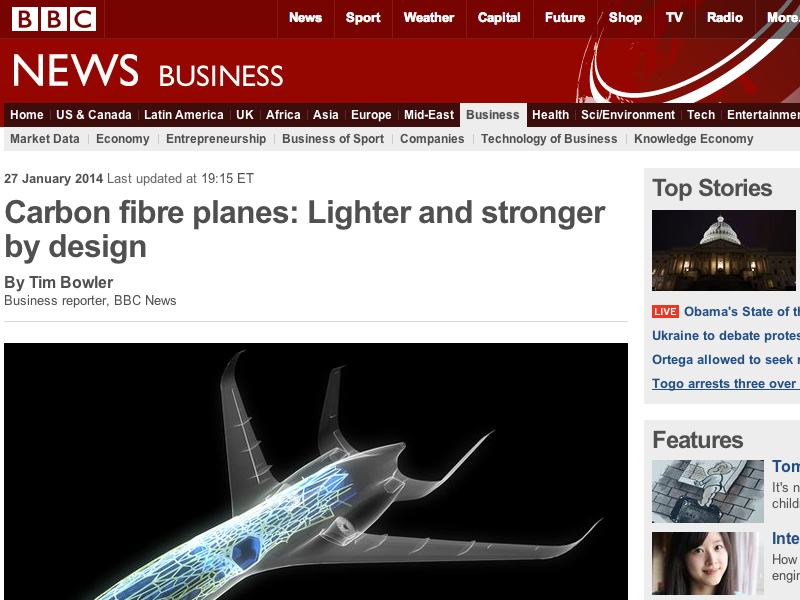
Reference: http://www.bbc.co.uk/news/business-25833264

Honduras Sovereignty Law Enacted: Investigation, Persuasion, And Then Elimination Of The Narcotics Aircraft Threat

News Analysis: To stop Cocaine Trafficking in Honduran Skies by over-flights going to America, Honduran Officials have enacted a new law. It requires a 18:00 Hours to 06:00 Hours Curfew for aircraft traveling at 5,500 meters (18,044 ft) altitude and at less than 550 kph  (341 mph). These Aircraft typically have no Flight Plans communicated with Officials and are carrying Illegal Drugs.

When detected at night, Honduran Air Force Fighters will approach the suspect aircraft and tell them by radio to land at a nearby airport for searching for contraband. If they choose to ignore the Air Force, they will be shot down.

This “Day Ruiner” Approach to Illegal Drug Transportation will effectively stifle shipments going North to America through Honduran Air Space.

Some people might think this “Draconian” Law is harsh in that it will kill the Traffickers. While, perhaps true, the number possibly killed by this Law is minuscule to the vast number of Americans who die weekly from Illegal Narcotics Consumption.

Reality.

Reference: http://rt.com/news/honduras-aircraft-drugs-trafficking-822/

☆ 787 Aircraft Lithium Ion Battery Problems Continue

News Analysis:  Some people think the continued Lithium Ion Battery problems of the Boeing 787 Aircraft susbstantiate the need for a re-examination by Aviation Authorities; This of the probability of fire commencing in such batteries on aircraft. This Carbon/Carbon Composite Aircraft CANNOT tolerate a fire incident without possible serious results. If such an event were to occur it would become a “Nightmare Liner” to its Manufacturer.

Various Aircraft Engineers think the Airframe grossly mis-judged both the Electrical Demands and the Electrical Supplies necessary for this Aircraft when it was designed. Now, existing customers and potential customers might consider how such negative events created by questionable design assumptions might impact their own Airline Flight Operations.  

The inherent frailties of Carbon/Carbon Composite Fuselages for Commercial Aircraft: Delamination, Detonation, and Flammability, which was already known for years by Aircraft Structural Engineers,  must also be reckoned with by Operators.

Reference: http://www.townsvillebulletin.com.au/news/breaking-news/boeing-confirms-new-787-battery-incident/story-fnjbnvta-1226802191933

Heathrow Airport Discovers A380 Can Increase Passenger Traffic While Decreasing Costs Via Fewer Aircraft Operations

News Analysis: The Large A380 is helping Heathrow Airport by Increasing Passenger Traffic but lessening Airplane Operations per year. Increased traffic means more Direct Revenue to the Airport Authority by passenger counts; as well as expenditure by passengers while at the Airport for Food, Entertainment, and the like. Taxis, etc, which are charged for Airport Passenger Drop-offs and Pick-ups contribute also to the Revenue Stream.

For Intercontinental Routes of either ‘Hub’ or Point-to-Point Configuration, the A380 will make “Cents” and Sense for Wise Airlines. Passengers will certainly benefit with the added Comfort and Space afforded by the A380; No “Sardine Can” Configurations for them (as on lesser Aircraft).

Reality.

Reference: http://www.bloomberg.com/news/2014-01-13/heathrow-defies-capacity-cap-as-superjumbo-aids-passenger-surge.html

★ Big Aircraft Sales, Small Passenger Seats Rile Passengers, Etc.

News Analysis: The Two Largest Commercial Aircraft Manufacturers are gleeful of their Sales Performances in 2013. The market for the World’s Largest Airliner has improved. The Smaller Single Aisle Aircraft Sales are performing very well. Their Common Stocks are up measurably as a result.

An area of interest for 2014 in Aviation is: It becomes a blot on the records of  Airlines as to wide-spread Customer Dissatisfaction with the smaller seats on the Single-Aisle Aircraft in particular. The Airlines increasing call for greater profitability (at the cost of passenger discomfort) has the Airframes ordering more of the smaller seats to “Cram Into” the fuselages. “More Passengers, More Revenue” is the Airlines’ Mantra. Since the “Me Too” Management of the Airlines copy what other Airlines Managements are ordering for their airplanes, passengers have little choice in seating. If they do want a little extra space, (which had been ‘normal seating’ for years) they now have to pay extra  for it; Extortion?

The “Fisticuffs” (of passengers against passengers or against flight crews) is due, in part, to “Minimalist Thinking” by Airline Managements regarding “Proper Passenger Environments”.

Discomfort breeds Hostility. Many people think the ‘Airlines Quest For Increased Profitability’ will only have the effect of “Charging More But Getting Less” for Airline Passengers.

The “Cookie Cutter” Mentality of Airlines’ Management some say is evidenced by the fact that the Most Unique Difference of Airline to Airline (Anywhere in the World) is their Aircraft Liveries!

The World’s Airline Passengers Deserve Better.

In 2014, Carbon/Carbon Matrix Composite Aircraft by Both of the Airframes will be Operational around the World. This “Advanced” Technology will bring it own “Advanced Failures” with it. What has been utilized on physically smaller “Shorter Life” Military Aircraft does not necessarily represent what is best for large Commercial Aircraft. A CERTAIN BENEFIT to the Airframes will be the fact that the Composite Planes will have shorter ‘Mean Times Between Failures’ than Metal Aircraft, Structural Engineers say. Airframes will be able to sell more Aircraft as a result some think.

Perhaps, as an example, the recent Ethiopian Airlines ‘Small Battery Fire” caused an alleged TWO MONTHS of “SECRET” Repair by its Airframe. Will this particular airplane have ‘normal life expectancy’; how can one be sure?  That a metal aircraft would be a much simpler fix is certain Maintenance Repair Organizations say.

Investors who have “Gone Long” on the two Airframes might expect Significant Problems to arise with Composite Technology on Commercial Aircraft resulting in a possible very quick diminution of their Common Stock Values.

The Short Term Benefits of flying ‘marginally lighter’ Composite Aircraft” might be upset by the ‘Inherent Frailties” of Composites used in Commercial Aircraft (De-lamination, Fire, and Impact Detonation). One should ask “Aircraft Structural Engineers” about this matter before investing or ask those who have actually bonded Composites. Ask “How does Bonding using Vacuum Bagging in an Autoclave differ from “Cold Bonding” in an Aircraft Hangar? What are the benefits of each process? If there is Landing Gear Failure what will happen to a Composite Fuselage hitting the runway?” The Aircraft/Power Plant Mechanics who presumably worked on the Ethiopian Airlines Aircraft should know.  Investors in Aircraft Insurance (or Re-Insurance Underwriters in particular) should pay attention to this probability. There could be Catastrophic Insurance Losses if a couple of Aircraft Events occurred through Fire or Crash or both.

Reality.

Reference: http://bigstory.ap.org/article/airbus-logs-record-2013-still-behind-boeing

Ethiopian Airlines 787 Burn Repairs Are The Manufacturer’s Secret

News Analysis: The Heathrow, England fire debacle, allegedly caused by a small battery in the 787,  reportedly had Composite Panel and Structure Damage requiring a  TWO MONTH Repair. Since the Airframe is keeping the Repair Methodology Used A Secret. Airlines, who have purchased or may purchase such a Composite Aircraft, are reportedly dismayed at the “Blackout”.  

One may question: Why the repair took so long? and Why the Manufacturer went “Black” about the Repair Methodology. A person knowledgeable about Aircraft might think that the damage to the 787 was more severe than disclosed AND/OR more costly  than discussed.

If Airlines had Clarity about this entire Fire Event, they may seek the purchase of Metal Aircraft (perhaps a little heavier but not Flammable; as is both Carbon and Petrochemical Adhesives used to bond the Carbon together).

Transparency Is Utilized By Men Who Do Not Fear The Truth.

Reality. 

Reference: http://seattletimes.com/html/businesstechnology/2022625459_ethiopian787firexml.html

When Landing Gears Fail, A Metal Aircraft Fuselage Outperforms Composites

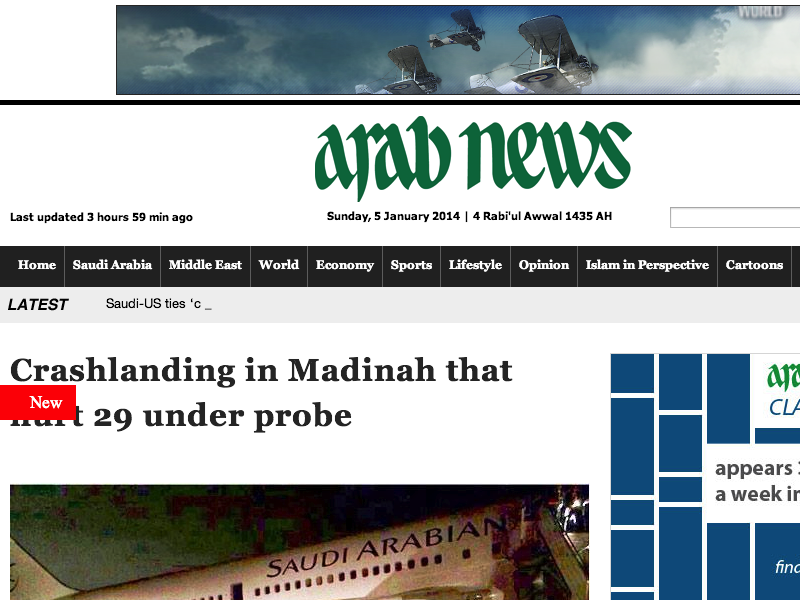
News Analysis: Landing Gear Failure of a Metal Fuselage Boeing 767-300ER of Saudi Arabia Airlines,  illustrate a safety concern many Aircraft Structural Engineers have been concerned about Composite Fuselages: “Detonated ‘Egg-Shell’ Energy Transfer”. In this incident, because it HAS a Metal Fuselage, only ‘Crushed Deformation’ occurred on the ‘Aircraft’s Underside. The Metal’s Deformation Process converted the Kinetic Energy back to Potential Energy. 

A Composite Fuselage, experiencing the same event, would evidence, the Kinetic Energy causing Embrittlement of the Adhesive/Fabric Matrix (Plasticizer Failure) with a Energy Release causing  the Composite Material to ‘fly apart’, typically, along Energy Vectors. Visibly, there would not be ‘Denting’ like metal. An appearance of Detonation, like a small explosion had taken place would prevail; pieces of the underside of the fuselage would be strewn everywhere.

In this particular Airliner crash due to faulty landing gear, 29 people were injured. One might reasonably expect a Composite Fuselage Incident to be far worse.

Reality.

Reference: http://www.arabnews.com/news/503901